Sunday, April 29, 2012

Lower Carb Crepes

Lower Carb Crepes
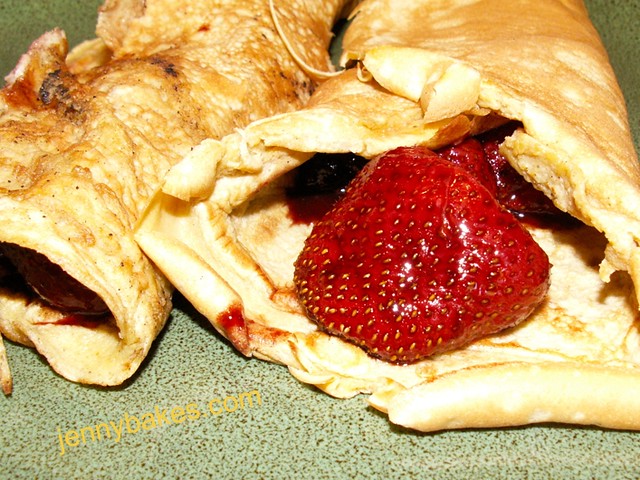
When you start cutting out flour and sugar, you would not believe how depressing breakfast can get. Slowly, I've found little tricks that make it bearable again, like this recipe for lower-carb pancakes/crepes. I found a different version online with all egg whites, but my version is so much simpler, and has no waste. Three ingredients.

Lower Carb Crepes

2 eggs
2 tbsp peanut butter
1 Splenda packet (optional)

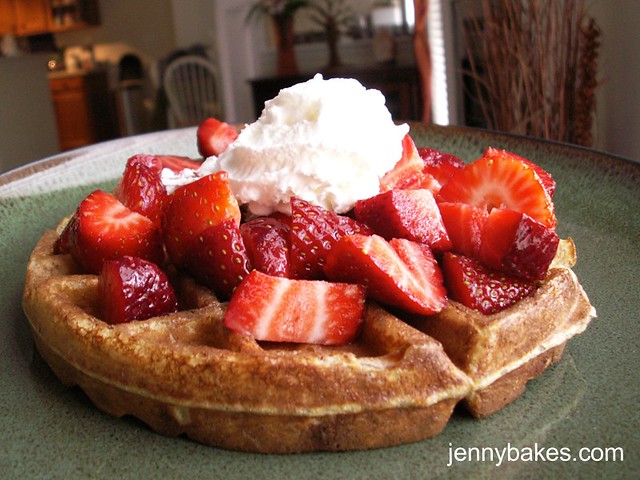
Directions: Blend everything in a blender or using an immersion blender. Heat pan to medium high, and cook about half the batter at a time for one crepe/pancake (thickness determines whether you want to call it a crepe or pancake!). Delicious served with fresh fruit, like these balsamic-roasted strawberries.

I originally posted this combination in May of 2009, when we were in the middle of strawberry season and I had just discovered balsamic-roasted strawberries.  That was with traditional crepes, but they are just as good with this recipe! (I sprinkled a little Splenda on the berries instead of sugar). 

Friday, April 27, 2012

Daring Bakers April 2012 - Armenian Nutmeg Cake

Armenian Nutmeg Cake

The Daring Bakers’ April 2012 challenge, hosted by Jason at Daily Candor, were two Armenian standards: nazook and nutmeg cake. Nazook is a layered yeasted dough pastry with a sweet filling, and nutmeg cake is a fragrant, nutty coffee-style cake.

This time around, I barely had time to make the nutmeg cake, but I'm bookmarking the nazook for when I finally get to my pick for Armenia in my Around the World reading challenge - Rise the Euphrates. But that is a post for another day. For this day, let me focus on my delicious disaster.

I learned something new in doing this challenge, actually. One can not simply replace a 9-inch cake pan when a 9-inch springform pan is called for. I imagine I actually know this. But I didn't have one of those other things (secret reference to So I Married an Axe Murderer), so I just tried sticking it into a regular one. So I had to bake it 20 extra minutes. And the crusty part didn't really set up. And I'm not really eating sugar anyway, so I was going to bring this in to my student workers. And now it is ugly and falling apart so I'm not sure I can. Ah well. The nibble I had was absolutely delicious, so I'm adding this to my recipe file of cakey breakfasty goodnesses, and a 9" springform pan to my shopping list.

Saturday, April 14, 2012

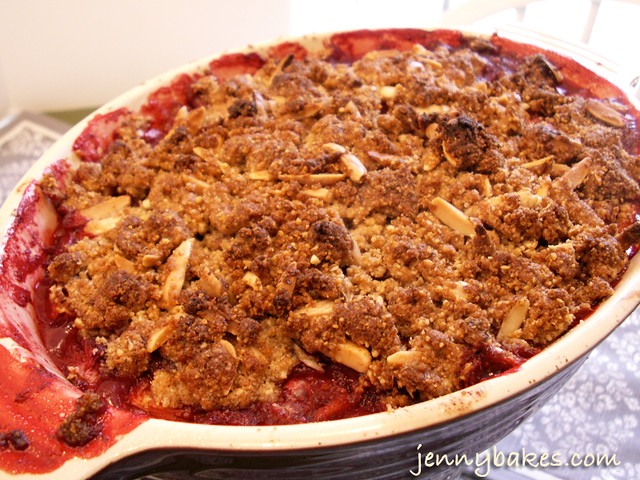
Strawberry Rhubarb Crumble (gluten-free, lower carb)

Strawberry Rhubarb Crumble
Strawberries are going full throttle, and I still had some of last year's rhubarb in my fridge. I looked up a few low-carb crumble/crisp recipes online but they sounded bad, so I decided to wing it and just mix some things together that I had on hand.

For once, it worked!  The brown sugar Splenda doesn't seem as chemically flavored, or maybe it helped that I didn't use much, and just let the sweetness of the fruit speak for itself.  Since my rhubarb was starting out frozen, I did sprinkle the fruit with 1 tbsp of cornstarch, but I'll list that as optional.  Look, unless you have some arrowroot on hand and know how to use it so it doesn't go gummy on you, that might be a better alternative, but I figured 1 tbsp wouldn't take it over the top. 

JennyBakes.com Strawberry Rhubarb Crumble (lower carb, gluten-free)

(Please credit if you use the recipe, since this is an original for once!)

Fruit:
2 cups rhubarb, fresh or frozen, diced
3 cups strawberries, sliced or quartered
squeeze of citrus juice (I used lime but that's all I had - lemon is probably best!)
1 tbsp cornstarch (optional)
1 tbsp brown sugar Splenda substitute (taste fruit, you may desire more or less depending on sweetness)
1 tsp cinnamon
1/2 tsp cardamom (optional)

Crumble:
1/2 cup slivered or sliced almonds
1/2 cup almond flour
1/4 cup chickpea flour (or other non-gluten flour)
1/4 cup brown sugar Splenda substitute
1 tbsp ground flaxseed
1 tsp cinnamon
1/2 tsp cardamom (optional)
4 tbsp butter

1. Preheat oven to 375 F.
2. Prepare fruit and mix in citrus juice, optional cornstarch, brown sugar substitute, and spices.
3. For crumble, mix dry ingredients together.  Cut butter into squares and mix with fingertips until incorporated (doesn't need to be at room temperature).  Mix in almonds.
4. Pour fruit into pie plate or other baking pan similar in volume.  Top generously with crumble mixture.
5. Bake for 45 minutes, or until mixture is bubbling.

Let me know if you try it, and what you think!  I'll probably use a similar recipe with fruit throughout the summer and fall.  I can't wait to try it with apples!

Sunday, April 08, 2012

Sunday Waffles

Healthy Waffle
We haven't been having our typical scone Sundays, and I've been desperate for something tasty for a lazy weekend breakfast. In hunting around the internet for low-carb breakfasts, I came across the Diabetes Daily forums, and this low-carb, gluten-free waffle recipe. The most impressive part? They actually TASTE GOOD.

The ingredients are a little strange seeming at first - vanilla whey powder (like what you use for protein shakes), ground flaxseed, sugar free coffee syrup (I just used a lesser amount of maple flavoring), baking powder, eggs, and milk. The batter looks runny and disturbing with all the flaxseed, but it bakes up nicely.

I double the original recipe, so the version I'm presenting below makes about 3 Belgian waffles.

5 Tbsp of vanilla whey powder
5 Tbsp of ground flax seed ( I use the golden)
1.5 tsp baking powder
2 eggs
2 tsp oil or melted butter
1 Tbsp flavored extract OR 2 Tbsp sugarfree flavored coffee syrup
2 T of water or coconut, soy milk , etc to thin batter

Mix everything together and bake in a waffle maker.

Friday, April 06, 2012

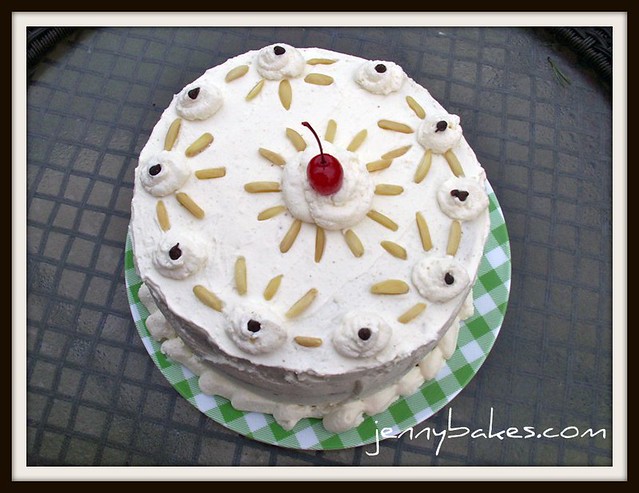
Sicilian Cassata for Easter

Sicilian Cassata
When I was gathering recipes for my Around the World baking challenge, I came across The Italian Baker by Carol Field, probably because a revised edition came out recently. I poured over recipe after recipe, through breads and pizzas, until I ended up in the dessert section. The most interesting cake, the cassata, was explained as a traditional cake for Easter. I knew I needed to save the recipe for Easter week, and to hunt down a book set in Sicily to accompany it.

Sicilian Cassata
So here we are, Easter week! There were a few bits in the recipe that made it less appealing; I particularly was not won over by the icing and marzipan, traditional as it was. I dug around the internet and discovered that quite a few bloggers I follow had baked a cassata together in 2008. (You can head over to La Mia Cucina for recipes and pictures of her version.) I liked the sound of their filling - heavier on nuts and chocolate, lighter on candied fruits than the traditional - and I liked their icing - a whipped cream cream cheese frosting. I made the entire cake in one night, from cake baking to syrup simmering to frosting making to assembly. The only thing that waited for morning was the maraschino cherry in the middle.

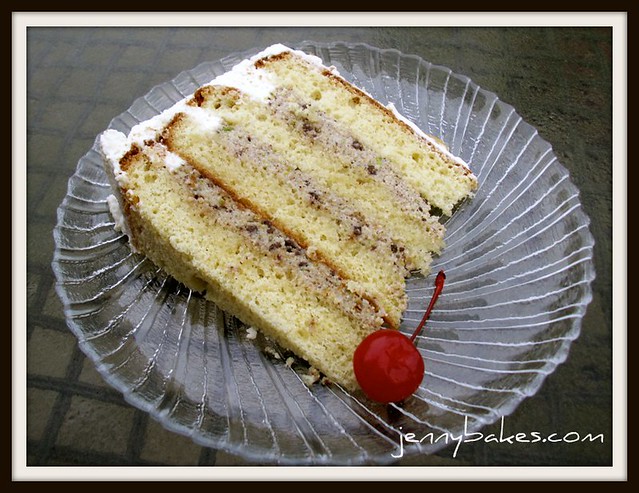
Sicilian Cassata Slice
In the end, the best description of this cake is that it is a cannoli cake! The cake absorbs the rum syrup, making it sweeter. The filling is primarily ricotta with all these flavors and textures mixed in - I just used a food processor to mix the cheese with the pistachios, chocolate chips, cinnamon, orange zest, and extracts. Instead of assembling the cake in a springform pan (as I do not have a 9" springform), I used a trick from my old cake decorating days of making a stormwall circle of the outside icing around the perimeter of each layer before adding the filling inside the circle. I chilled the filled cake about 30 minutes before icing the outside, then let it sit in the fridge overnight. I think you can see from the slice that the final cake did not suffer from this treatment - the layers are even, and firm. The icing didn't weep or slide around. And I thought it was delicious!

In my preparation, I came across a beautiful travel blog entry on Sicily.  Who wouldn't want to visit the land of this delicious cake?

Thursday, April 05, 2012

Coconut Macaroons

Skinny Coconut Macaroons
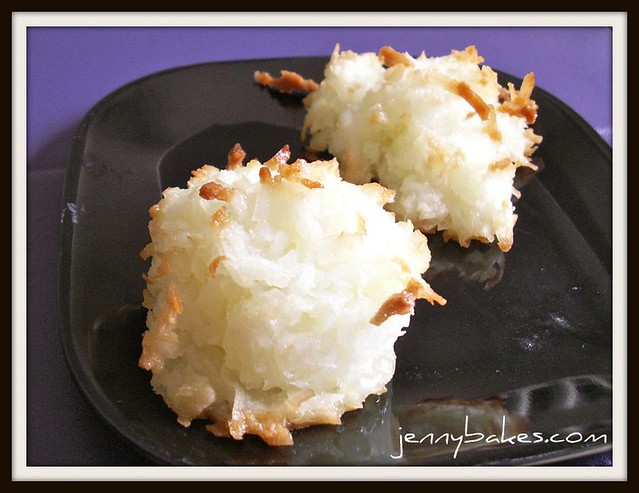
I made the coconut macaroons recipe from Skinny Taste, based on a recommendation from my friend Kasia.  I've never made macaroons before so I don't know how these are any healthier, but they are tasty just the same!

Lots of holidays coming up for lots of religions - I have a massive Easter cake to post about in the next few days, so I thought I'd post a Passover-friendly recipe first.  Not much to say, too late at night to be very reflective.

Sunday, March 25, 2012

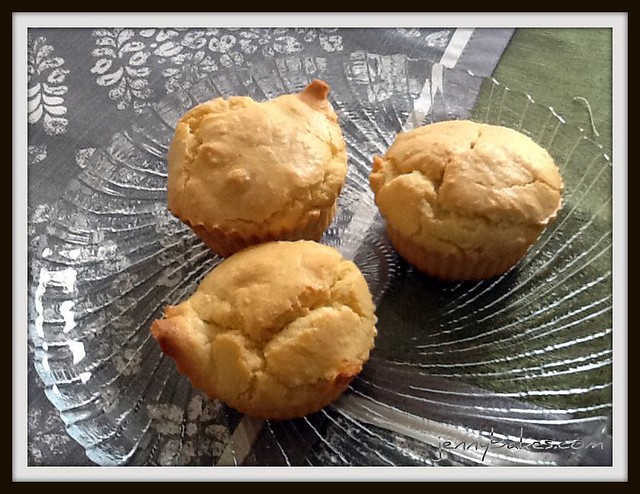
More Sugar Substitution - Almond Baby Cakes

Almond Baby Cakes
Because of our recent commitment to lower carb eating, I'm always on the lookout for recipes that won't suffer from substitution. Take these almond baby cakes from Dorie Greenspan - naturally gluten-free, since so many French baked goods are made of almond flour instead of wheat to begin with (according to her).

After not finding great results baking with Splenda, the taste being too evident, I decided to experiment next with Stevia. Stevia is naturally occurring, in a shrub from the daisy family. The blend I used is similar to the Splenda for baking - somewhat powdery so you can use it cup for cup in a recipe.

I wish I could impart to you that this is the answer! That Stevia tastes like sugar! That this is the easy solution to make all your baked goods lower carb! Oh how I wish that could be true. I found this to have just as bad of a taste as Splenda, if not worse. While the Splenda cheesecake seemed to mellow after a few days in the fridge, these were better warm. I tried one cold this morning and had to just toss it. The chef at the alternative baking class did say we could also just reduce the amount of sugar in a recipe; that may be what I'll have to try next, although I'm not sure it will sufficiently cut back on carbs enough for me. Agave nectar may be another thing to try, but I'm getting mixed information on that ingredient. The Wheat Belly guys and low-carbers say not to use it, but the Glycemic Index people say it is okay. The Wheat Belly guys actually said it is worse than sugar because it is higher in fructose than sugar is. I don't understand enough about the chemistry behind any of it.

In the past, I never used to blog something and urge you not to make it. I just thought my experimentation might teach my readers something too. I don't believe the original Dorie Greenspan recipe to be flawed, and if you were looking for a gluten-free treat that didn't need to be low-carb or low-sugar, I'd try the original recipe as written. Ground almonds make a nice toothsome, slightly crunchy texture to things, and add a lot of flavor. The way the ingredients are blended together, there is nice volume and lightness to these baby cakes.

Tuesday, March 20, 2012

TWD Baking with Julia - Irish soda bread scones

Irish soda bread scones
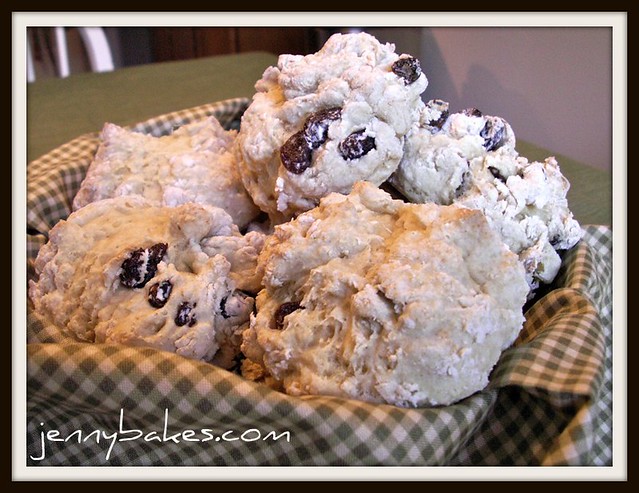
This TWD Baking with Julia challenge featured the Irish soda bread recipe, which I made for St. Patrick's Day Eve.  I've made soda bread in the past, in fact ruining a pizza stone by throwing chocolate chips into one, haha.  Soda bread is a lot like biscuits but with much less fat, just the wee bit of fat in the buttermilk, so while they are pretty tasty while fresh out of the oven, they turn into rocks later on.

Apparently this also stops any extraneous flour from being absorbed into the surface as it is handled, as evidenced by my photo.  To make these easier to share, I whipped up a batch, added raisins, and made them into sconey sized portions.  I am still partial to cream scones, but it is nice to make a traditional recipe from the isles.  :)

Please do check out the hostess blogs for this recipe - Carla of Chocolate Moosey and Cathleen of My Culinary Mission

Saturday, March 17, 2012

Healthy Baking Class and Fondant Roses

Baking session
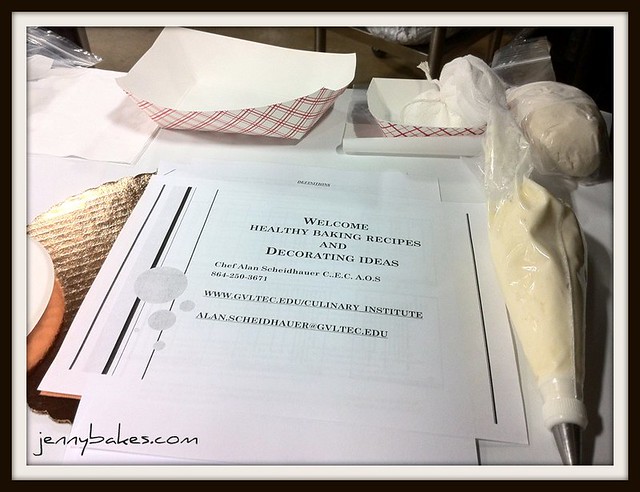
This morning I went with some of my family to the Spice of Life Food & Fitness Festival at the convention center in Greenville. I was expecting one of those kinds of festivals where you pay money to get in and then pay more money if you want something one of the vendors is offering, but was pleasantly surprised to find actual free things. The best offering of all was a free cooking school (hour-long sessions) offered by the Culinary Institute of the Carolinas. The topic in the time period I was going to be there? "Healthy Baking Recipes and Decorating Ideas." They were set up to have 20 audience members do hands-on and the rest could just watch, so I plopped down 20 minutes before to make sure I'd get to play along!

Chef Alan walked us through how to make a baked good recipe healthier, whether that meant making it vegan, low-fat, gluten-free, or wheat-free.  I also asked him about decreasing the sugar, but he hadn't really prepared to answer that question.  He said we could e-mail him, haha... I plan to!

The second half of class included learning how to make a rose out of fondant. Now, I've tried making my own marshmallow fondant before, but hadn't ever played with official fondant.   The chef also directed us to a local cake supplier that I had no idea existed - CakeSupplies4U.com.  Not the greatest name, but it means I can make an order and pick it up in town!  That's worth the entire price of admission to the festival in itself. 

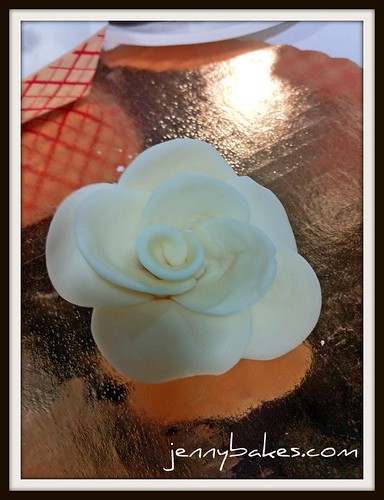
My first fondant rose
My rose is not the greatest; clearly I needed slightly smaller fondant marbles and to roll everything tighter, but I took home my bag of leftover fondant to practice on. Apparently the same technique is used with gum paste as fondant, it is just that gum paste dries more quickly. I don't think it is so outside my abilities to learn more about this, so that will be fun.  Honestly I wish I could go through the Culinary Institute of the Carolinas' pastry certificate but last time I checked I'd have to go to class during the day, and well, I have a job.  But sessions like this get me itchy!!

The other part of the decorating was to teach very basic cake decorating strokes like stars and shells.  Since I spent several months as a cake decorator, I didn't learn anything new there, but it is always good to force my brain to do the reverse shells thing since it takes a while to kick it into the right gear. 

If you are in Greenville, SC, and read this before Sunday the 18th, this session will repeat tomorrow at 11:30.  You should go!  It was fun for me, and I look forward to trying some of the recipes that were handed out for alternative baking.  The way the recipes are written, it would be easy to make a standard recipe and then try again with all the versions for comparison.  I might do that on this blog someday; it could be very educational for me!

Thursday, March 15, 2012

Coffee Low(er) Carb Cheesecake

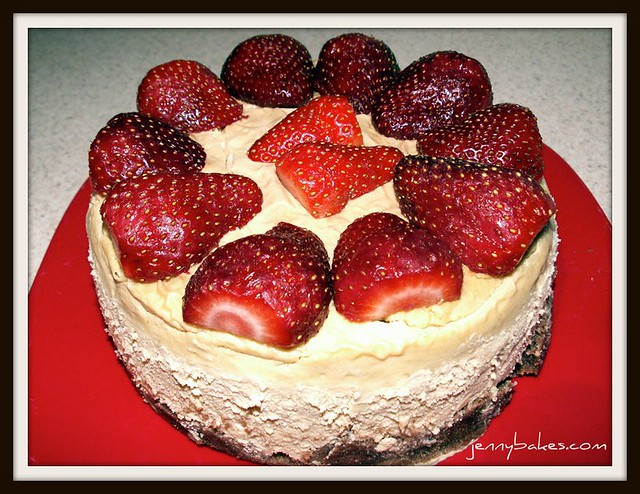
Coffee Lower Carb Cheesecake
I've mentioned that we are eating differently in my house. Suddenly it was pi day (3.14) and I HAD to bake something.  I Skyped my husband and announced that today (yesterday) was the day I would be attempting a cheesecake with Splenda in place of sugar.  He got to pick the flavor, and he picked coffee.

I found a low carb cheesecake nut crust recipe and made the chocolate variety, and topped it with a coffee version of Abbey's (In)famous Cheesecake (the Daring Bakers challenge I hosted), just replacing out sugar for splenda.  The recipe had no flour, so I didn't need to replace any of that.  I made itty bitty ones in a mini cupcake pan, and a 6 incher.  I tried one of the itty bitties before it had chilled overnight and was sorely disappointed - the texture seemed gummy and the tinny taste of the Splenda sang out more than the coffee.  I was bummed.  Tonight I decided I would defeat it with fresh strawberries; luckily the overnight chill in the fridge really makes an incredible texture difference.  So it was creamy but still a bit tinny.  I wish I had tricks to overcome that particular nasty aspect of Splenda.  It doesn't bother me in coffee, but I notice it in pop (soda) and in this.  Maybe it is a hot vs. cold thing?

I'm not really providing an official recipe since I just kind of adapted things.  I also insist on calling it lower carb rather than low, because nuts still have carbs, but really that is the only source in the entire recipe.  Oh yeah and the strawberries but at least they are a real food!  

Wednesday, March 07, 2012

Hamantaschen

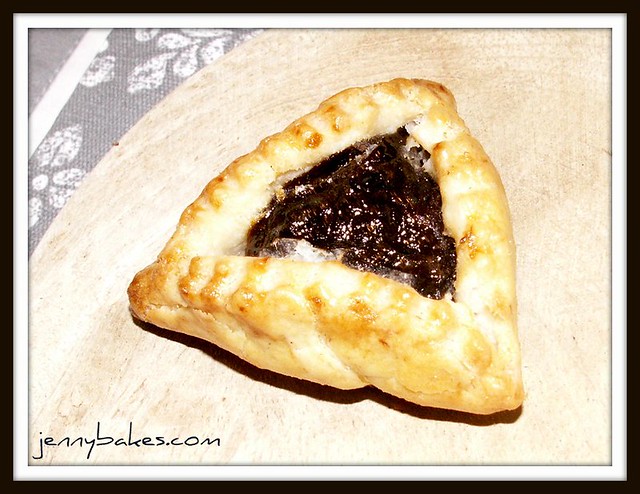
Hamantaschen
Hamantaschen translates to "Haman's pockets."It has to do with the Jewish holiday of Purim, based on a story int he book of Esther, and I will not attempt to explain it here.  I just don't know enough.  But we should be nomming on these and stealing from Haman's pockets, because he was an evil evil man. 

I had some prune lekvar and some pastry dough leftover from making rugelach, so I made hamantaschen! 

According to Wikipedia, one should drink on Purim until he can no longer distinguish between the phrases arur Haman ("Cursed is Haman") and baruch Mordechai ("Blessed is Mordecai").  Sounds like a fun holiday to me! 

Monday, March 05, 2012

TWD Baking with Julia - Rugelach

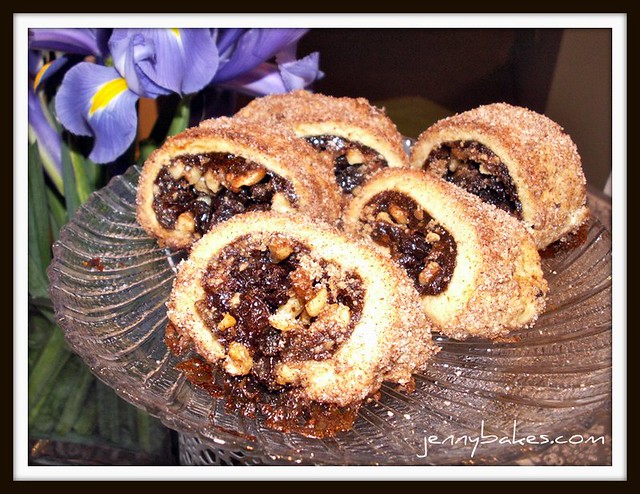
Rugelach
I was aware of the Tuesdays with Dorie group, that baked their way through Baking: From My Home to Yours for several years. They were always on my periphery, making delicious recipes at what seemed like a crazy pace. Then I missed the bloggers working their way through the Bread Baker's Apprentice, and would have liked to join in but it seemed beside the point to jump in partly through.  So when I heard that TWD was going to do another round, this time working with the book Baking with Julia, I knew I'd want to join.

Then I decided to start limiting my sugar consumption.  I thought maybe I wouldn't do this after all, but then saw that they would only do two recipes a week, and you only had to do one a month to be involved.  Well.  I can do that kind of pace.  And maybe a little taste, then HURRY UP GIVE THE REST AWAY.   Ahem.

This week's recipe is rugelach!  I had tried a rugelach recipe in the past, and tried making it chocolate, and just remember not liking it much.  It must have either been unlikable enough that I never blogged it, or BJB (Before Jenny Bakes), as it is not in my blog!  I was eager to redeem myself.

Prune Lekvar
In Baking with Julia, it recommends that you use a homemade apricot or prune lekvar. As I'd made rugelach before, I wanted to have a bit more of a challenge, so I did make the lekvar from scratch.  It was easy, and much thicker and more substantial than a jar of jam would have been, more like a fruit butter.  I posted that I was making lekvar on my Facebook wall, and some people assumed I was making hamantaschen.  It turns out that Purim falls on Wednesday this week, but it did not happen to be on my radar since I'm not Jewish.  I often find this happens, that I accidentally make desserts appropriate for other people's religious holidays.  I always seem to make something creamy around February 2nd too (look that one up if you'd like, haha!).  I used one of those little scraps in the corner to make one hamantaschen, but I will wait to post that picture until Wednesday.

Inside of cookies before rolling
My rugelach was quite stuffed, so much that I barely got the end tucked under itself to roll it. Were I to make it again, and I might, since this was a light flaky pastry with many delicious flavors inside, I'd roll the dough thinner, or maybe try the crescent shape I've seen in other recipes.  First the prune lekvar was spread on the dough, then the cinnamon-sugar mixture, then raisins and walnuts.  I went very traditional with this recipe, since I like to do that before experimenting. 

One of the best parts of the TWD challenge is that everyone owns the cookbook.  Baking with Julia is a baker's staple, one of 3-4 I think every person interested in baking should own.  You can buy a copy here, and join in on the challenge over at TWD!

Saturday, March 03, 2012

Ginger Soy Baked Tofu

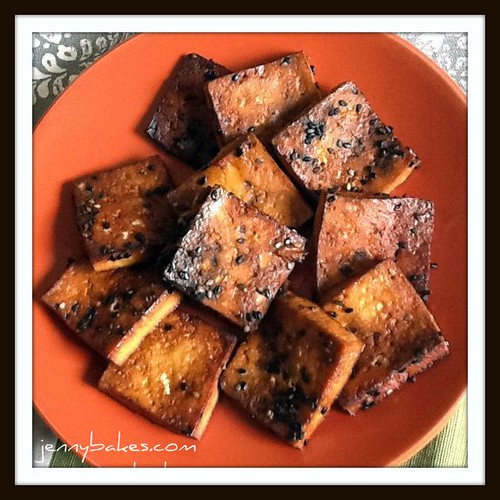
Ginger Soy Baked Tofu
Hey, you can bake savory things too! Lately we are eating tofu at least once a week, and it usually takes the form of baked squares like this. My basic technique is to press the tofu (paper towels on top and bottom, plates on both sides, heavy items on top, let sit for 30-60 minutes), cut it lengthwise through the middle and then width-wise into equal sized squares, and marinate it in whatever liquid I'm flavoring the tofu with.  In a pinch I might use something bottled (barbecue sauce can be tasty, for instance), but it doesn't take much time to whip up a marinade.

I made this recipe for Baked Ginger Soy Tofu Squares from the Garden of Eating blog a month or so ago, and it was tasty!  I don't necessarily follow the recipe exactly, just use what I happen to have on hand.  I'll post what I DID, but please follow the link to the original because it is surely tasty too.  One note - I would use tamari or low sodium soy sauce.  The first time around I used tamari, but this time I used regular soy and it was WAY too salty.  I also bake mine at least twice as long as she recommends, because I like my tofu chewy and caramelizing on the corners!


Ginger Soy Baked Tofu

Ingredients
* 1 (16-ounce) block extra firm tofu
* 1/2 cup soy sauce
* 2 tsps oil
* 2 cloves garlic, pressed or minced
* 1 Tbsp black sesame seeds
* 1 Tbsp ginger preserves
* Dash of tabasco sauce or hot sauce

Directions
1. Drain and rinse the block of tofu and cut into squares (see narrative above).

2. Meanwhile, make the marinade. Combine the soy sauce, oil, garlic, jam, hot sauce, and sesame seeds and stir well to make sure the jam is dissolved.

3. Put the cut tofu in a 9x13 pan, cover with marinade, and let sit for 30 minutes. Flip the tofu once and let marinate 30 more minutes, flipping once more before baking.

4. Pre-heat your oven to 350-degrees. Bake in the same pan for 20 minutes, flip squares, and bake 20 minutes longer.  If you like them softer, you can try doing 10 and 10, but you can probably bake as long as an hour if you like them chewy and a little crispy on the edges.

Baked tofu is one of those dishes that can be enjoyed hot or cold.  Try it with rice, greens, salad, or even in a sandwich.

Tuesday, February 28, 2012

Quick Breads and Google Friend Connect

This month's Daring Bakers Challenge was on quick breads.  I was unable to participate because of travel and lingering illness, but please do check out the blog roll for a variety of delicious quick breads!

I wanted to take this opportunity to let you know that Google Friend Connect is disappearing as of March 1, at least for people who don't use Blogger.  Over the last five years, many of you have followed my blog this way.  I will not be creating a page in Google+ at this time, as I already have plenty of web presences to maintain online, even if that is what Google had intended.  If you are in the category of using Google Friend Connect but not Blogger, please continue to follow me by adding me to your RSS feed, following me in Facebook, or stalking me online. 

Back to quick breads!  While I didn't bake anything for this challenge, I have made many a quick bread in my time.  Some highlights:

Saturday, February 25, 2012

Arroz Zambito

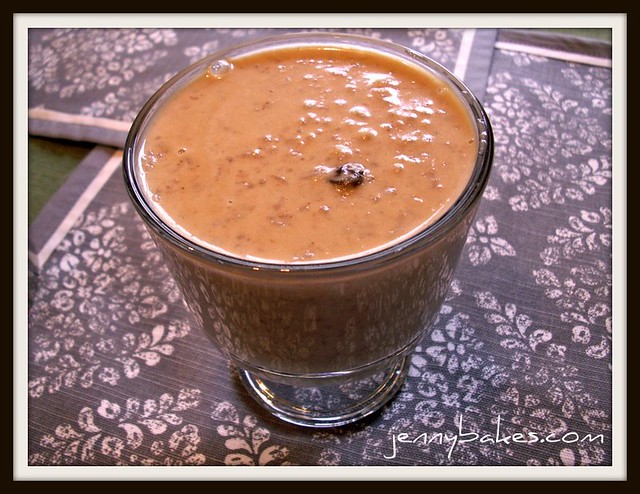
Arroz Zambito
In my Around the World Reading Challenge, I read The Storyteller by Mario Vargas Llosa for Peru (you can read about it in my reading blog.) Much of the book takes place with the indigenous people living in the jungles of Peru.

I knew my Peruvian dessert would need to be something special. I was finding a lot of dishes with clear European influence, heavy on the dulce de leche, such as Suspiro a la Limeña, a very sweet meringue topped custard. This looks delicious, and I'd like to make it someday, but it did not seem quite unique enough. I also found a subset of anise-flavored desserts, which must be a Peruvian flavor profile, like the Turrón de Doña Pepa. Just looking at the picture made my teeth hurt. I started to talk to my friend Karen, who talked to her friend from Peru, and they suggested Arroz Zambito. The best recipe I found was over on the My Life in Peru site, where she explains the racial undertones to the word "zambito," but also states
"While it’s generally considered that the Spanish brought arroz con leche to Peru, the native Peruvians took the recipe and ran with it, turning it into something that is very Peruvian.  So if we can look past the racial connotations of the name, we can see how it perfectly fits, in this marriage of European and indigenous Latin American flavors."
This combination, of European and indigenous Latin American flavors, couldn't have been any more perfect to mirror the contrasts and conflicts in The Storyteller.

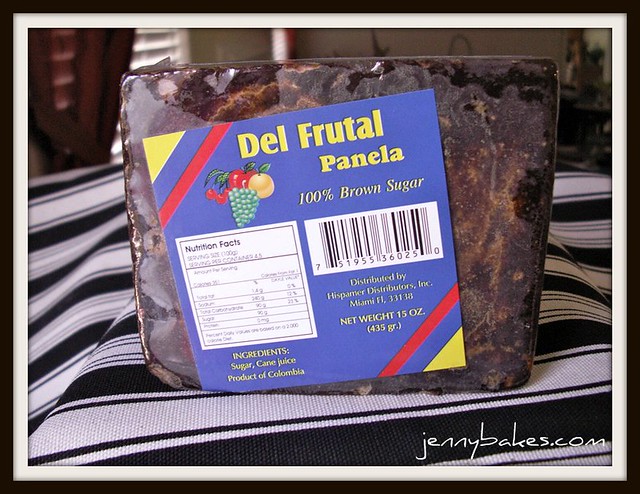
Panela
First I had to hunt down chancaca, a key flavor ingredient to the Arroz Zambito.  Chancaca, also known as panela, raspadura or piloncillo, depending on which part of Latin America you come from, is basically what is left after the moisture is evaporated out of cane sugar.  I had to go to a local supermercado to find any, but they had an entire shelf.  It is a hard block and has to be grated before use.  It doesn't just fall apart on its own, that's for sure.  I got worn out after 3/4 cup or so, so my Arroz Zambito may be a little less sweet than it should have been.  That's okay with me since I haven't been eating a lot of sugar lately!  The raisins, as they cook in the arroz zambito, get dark and syrupy too, so every time you bite into one it is like a pulse of sweetness.

The picture at the top is a bit misleading, because I left the rest on low heat, and more of the liquid evaporated, meaning it was a little denser than as pictured.  I think that's what you want - not soup, but a creamy mouthful.  I have no problem admitting that I was home sick yesterday, and made this for breakfast.  Can you have better comfort food than a warm, spicy, rice dish?  This isn't just regular rice pudding. The spices and panela/chancaca make a big difference in flavor and dimension.  I now have a half-block of panela left, and I may try this chancaca syrup.  

Arroz Zambito (recipe from My Life in Peru)

Ingredients:
  • 1 quart (liter) of water
  • 3/4 cup of rice
  • 2 cinnamon sticks
  • 6 cloves
  • 1/2 cup of raisins
  • 1 cup of chancaca (or panela, raspadura, piloncillo), grated
  • 3 cans of evaporated milk
  • 1/2 cup sugar
  • grated coconut and powdered cinnamon for garnish
How to Make It:
  1. Boil the rice in the water with the cinnamon sticks and cloves.
  2. When the rice has absorbed all the water, remove the cinnamon and cloves.
  3. Add the raisins, the chancaca, and the three cans of evaporated milk. (make sure it’s evaporated, not sweetened condensed!)
  4. Let it simmer for about 15 minutes, then add the rest of the sugar. Continue cooking on low heat, stirring constantly, until the pudding is of a creamy consistency.
Serve in a bowl, sprinkled with grated coconut and cinnamon, if desired.
 

Monday, February 20, 2012

Cup-Cakin' in Dallas

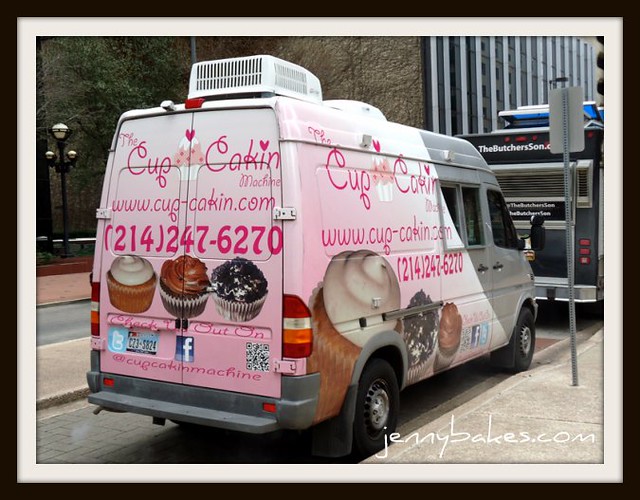
Cup-Cakin' Machine
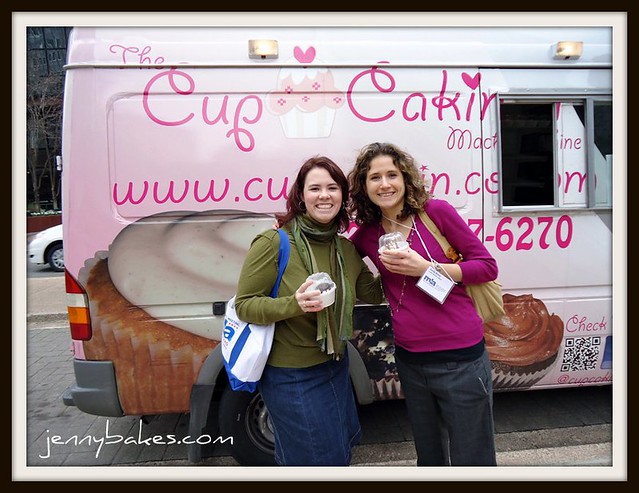
Food trucks are trendy right now, but I don't have any in MY city, so it was still an inexperienced phenomenon for me.  Then I hit Dallas, Texas for the annual MOUG and MLA Meetings, where I was bound to connect with my BlogFan for Adventure #3.  I had done a little research, and other than a tortilla factory in a suburb that would have been impossible to get to without a car, none of the bakeries of Dallas were really calling my name.

Sara and Emily on a Cupcake Truck Safari
Luckily, Emily (BlogFan) had also been doing some research, and had found a cupcake truck! The Cup-Cakin' Machine can be seen around Dallas, and you can always find their schedule by following them in Facebook or Twitter. That's what she had done, and on Thursday, they were in Thanksgiving Square, a short walk from the Fairmont Hotel. We braved the coldish weather for our cupcakes, and brought Sara along too.  It was too cold to eat outside, so we brought them back to the hotel.  (You can follow our previous adventures in Philadelphia and San Diego, and there will be more to come, as long as we are both music librarians!)

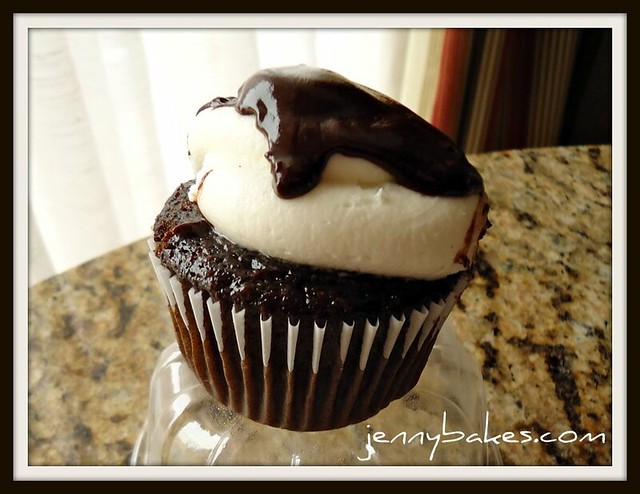
Chocolate Triple Threat Cupcake
They had 6-8 flavors available that day, and I chose the triple chocolate threat. It was delicious - the cake part was moist and soft, and actually tasted like chocolate. The white chocolate buttercream was thick and sweet but not greasy, and the ganache on top was a nice touch. 

Do you have food trucks in your town?  Do any of them have BAKED GOODS?  If I had a food truck, I would do tea and scones....

Monday, January 30, 2012

Malva Pudding

Malva Pudding
This past week, I was reading Moxyland by Lauren Beukes for my Around the World reading challenge.  Beukes is South African and Moxyland is also set there.  As I researched desserts for South Africa, I was looking for something a little different this time - not something that had to be native but representative of the blend of cultures. 

I was torn between melktert (milk tart, like over on What's Gaby Cooking?) and malva pudding, both of which were absolutely everywhere.  Malva pudding has even been on Oprah, recreated for her by the famous Art Smith.  He is famous, I swear.  At least on this blog.  Then I came across this story about South African home cooking and comfort food on Honest Cooking, and that solidified my desire to make a malva pudding. 

Remember, there is a big difference between what Americans call pudding (a thick, set custard) and the rest of the world calls pudding.  In this case it is a moist cake, made moister by pouring a syrup over the top at the end of cooking.  This is apricot jam based, and every recipe I looked at was emphatic that it must be served with custard.  Luckily I still had some birds custard powder from the import store.  You can see in the picture that I've not exactly perfected it yet (mine is gloppy).

This was delicious, but I didn't come close to being able to eat one serving of it.  It is very rich, very sweet, and very very South African.

South African Malva Pudding (from Honest Cooking)
Serves 6-8
  • 2tbsn unsalted butter
  • 1 cup / 250dl sugar
  • 2tbsn smooth apricot jam/preserves
  • 2tsp white vinegar
  • 2 cups/ 500dl flour
  • 2 cups/ 500dl milk
  • 2 eggs
  • 2tsp baking soda
  • pinch of salt
Syrup :
  • 1 cup / 250dl sugar
  • 1/2 cup / 125dl boiling water
  • 3/4 / 190dl cup unsalted butter
  • 1tsp vanilla extract
1. Pre-heat your oven to 180°c / 356°f and grease a 20cm square pie/baking dish.
2. In a large saucepan, melt the butter, sugar, apricot jam and vinegar together until the sugar has dissolved and the mixture is smooth. Remove from the heat and allow to cool for 5 minutes. Meanwhile sift the flour.
3. Alternating, add the flour and milk until the mixture is smooth and thick.
4. Add the eggs one by one, beating well after each addition.
5. Add the baking soda and salt and beat well.
6. Pour the mixture into your prepared baking dish and bake for 30-45 minutes until the pudding is dark and baked through (a skewer inserted should come out clean).
7. In a small sauce pan, heat the syrup ingredients and cook until all the sugar has dissolved.
8. Pour the syrup over the cooked pudding and allow to stand for 10 minutes before serving with custard. (In South Africa it would be a sin to serve this with anything other than UltraMel custard but you can use any custard you can find)

Sunday, January 15, 2012

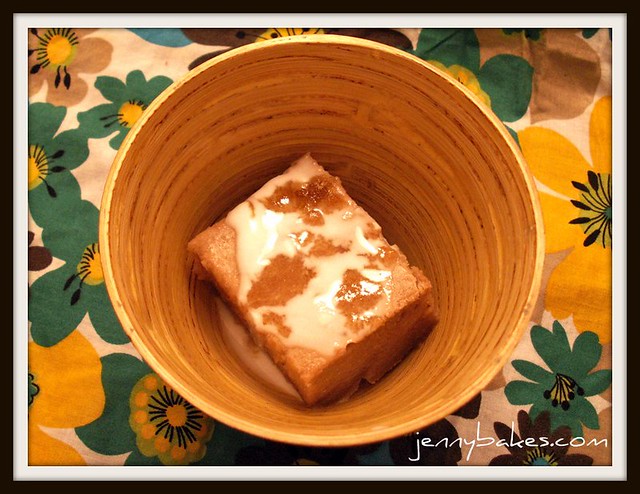
Po'e - Tahitian Fruit Pudding

Po'e - Tahitian Fruit Pudding
This month for the Around the World challenge, I visited Tahiti by reading Frangipani by Celestine Vaite.  Two recipes come up for baked goods and desserts, at least in internet searching - coconut bread that seems to be a hotel or maybe French influenced tradition, and po'e.  I was very interested in po'e, which was described as a fruit pudding, typically served as part of the traditional tamara'a barbecues, after being baked in the fire pit.  A very poetic description of po'e within its meal context can be read on Islands.com.

The main recipe I found online for po'e is posted on The Polynesian Kitchen blog, and that is the one I used.  It is pointed out that traditionally this would be cooked wrapped in banana leaves, over a fire, but the recipe is adapted to the modern indoor kitchen.

Po'e is basically a fresh fruit, pureed and mixed with cornstarch or arrowroot, a bit of sweetener, and then baked.  It is served by being topped with coconut cream, and I found references online for serving it hot as well as serving it chilled.  The smell of my banana po'e was so enticing, there was no way we were going to wait for this to chill before trying it the first time!  On the French language blog La Cocinera Loca, you can see a wonderful photographic step by step demonstration, even if you can't read the directions.

I thought this was delicious, and different.  I love that you can do the same method with almost any fruit - I came across multiple mentions of pumpkin, yuca, and papaya variations.  

Po'e

4 to 6 servings

* Ripe bananas, peeled and cut into chunks -- 6-8 Bananas
* Brown sugar -- 1/2 cup
* Arrowroot or cornstarch -- 1 cup
* Vanilla -- 2 teaspoons
* Coconut cream -- 1 cup

Method

1. Preheat oven to 375°F. Puree the bananas in a blender or food processor. There should be enough puree to make 4 cups.
2. Mix together the brown sugar and arrowroot or cornstarch. Add this mixture and the vanilla to the bananas and process well. There should not be any lumps of starch. Adjust sugar to taste.
3. Butter a 2-quart baking dish and pour in the puree. Bake for 30-45 minutes, or until the pudding is firm and bubbling. Remove from oven and allow to cool. Cover with plastic wrap and refrigerate until well chilled.
4. Cut into cubes and place into a large serving bowl or in individual bowls. Top with a dollop of coconut cream, a little more brown sugar and serve.**

Variations-

**Boil and Cook the Bananas on the stove until the fruit turns brown.  Add in remaining ingredients and stir until combined. Butter a 2-quart baking dish and pour in mixture. Bake for 30-45 minutes, or until the pudding is firm and bubbling. Remove from oven and allow to cool. Cover with plastic wrap and refrigerate until well chilled.

** Try substituting papaya, mango, pineapple, canned Pumpkin or other tropical fruits for some of the bananas. Just make sure there is a total of 4 cups of fruit puree. Ripe plantains can also be substituted for the bananas. For juicier fruits, you will probably have to add more arrowroot or cornstarch.

Notes

* Coconut cream is the thick coconut milk that rises to the top of a can of coconut milk. Don't shake the can before you open it and you can skim it right off the top.
Sunday, January 08, 2012

Caraway Seed Cake

Caraway Seed Cake
In Dubliners by James Joyce, there is a story called Counterparts.  The main character, Farrington, moves in and out of pubs in Dublin.  As I was reading the stories in this volume, I started marking the food words that I hadn't experienced so I could research them later - barmbracks, blancmange, and then what is mentioned in this passage:
"The curate brought him a glass of plain porter. The man drank it at a gulp and asked for a caraway seed. He put his penny on the counter and, leaving the curate to grope for it in the gloom, retreated out of the snug as furtively as he had entered it."
While Joyce may have meant a literal caraway seed (this could be a drinking tradition), any search I did of "caraway seed" and Ireland brought me to a variation of the caraway seed cake!  I have had bread with caraway seed in it before, but never something sweet.  I'd already made soda bread in the past, and endless scones, so I was looking for something new to me.

Caraway seed bread may be new to me, but it isn't new to Ireland.  According to Imen over on the I Married an Irish Farmer blog, caraway seed cake is merely a variation of the Madeira cake, which dates back at least to the 18th century in Ireland.  The Maderia cake, really just a pound cake of sorts, is thought to have been developed to eat while sipping Madeira or port wine.  It is very much an afternoon tea type cake, and would have been far more likely to be consumed by women, in groups.  She has a recipe on her site, but I found a version I wanted to try over on Rosa's Yummy Yums.  Rosa is someone I've "known" for several years through the Daring Bakers, so I trusted her recipe!  The two recipes aren't much different - Rosa adds a bit of almond meal and uses orange zest for the lemon, while I went back to the lemon for a more traditional flavor profile.  We will just pretend that Rosa doesn't call this an English cake.  I'm sure it is impossible to keep delicious baked goods a secret for long anyway!

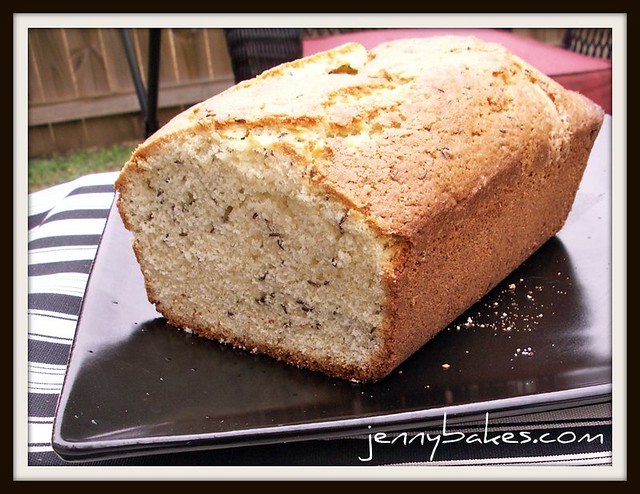
Caraway Seed Cake Slice 

Caraway Seed Cake
A variation of the recipe on Rosa's Yummy Yums

Ingredients:
3/4 cup unsalted butter
1 cup granulated sugar
1 Tbsp lemon zest
1/2 tsp almond extract
3 eggs
2 1/4 cups all-purpose flour
1 Tbsp baking powder
2 Tbsp ground almonds (almond meal/flour)
1/3 cup milk or buttermilk
3 Tbsp caraway seeds

1. Cream butter, sugar, and zest.
2. Beat in almond extract and eggs, one at a time.
3. Blend dry ingredients together and add slowly to mixture, alternating with milk.
4. Stir caraway seeds in by hand.
5. Bake in loaf pan at 350 F, 50-60 minutes.
6. Let cool, slice, and serve!

It is my personal opinion that since this is so close to a pound cake, you probably want to serve it with something, like fruit and whipped cream or some kind of spread.  It could be that I'm just not pound cake's biggest fan.

I made this to accompany my Irish reads for the Around the World Challenge.  Both were easy reads, and recommended.
Dubliners by James Joyce (my review)
A Greyhound of a Girl by Roddy Doyle (my review)

Monday, January 02, 2012

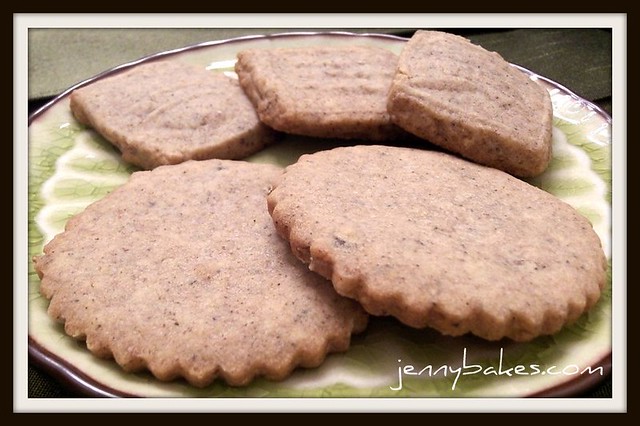
Croatian Black Pepper Cookies (Paprenjaci)

Croatian Black Pepper Cookies (Paprenjaci)
This year, I am doing a reading challenge called Around the World in 52 Books with a group in GoodReads.  Making the list of what I wanted to read and hunting down the books online and in used book stores has been a blast, and I will be posting reviews in GoodReads and in my reading blog, Reading Envy.

Of course, reading 52 books didn't seem like enough.  I started to wonder if I could challenge myself to do a baked good from every country too.  Either a bread or a dessert.  I'm not sure I'll have time every week, but I'm going to try! 

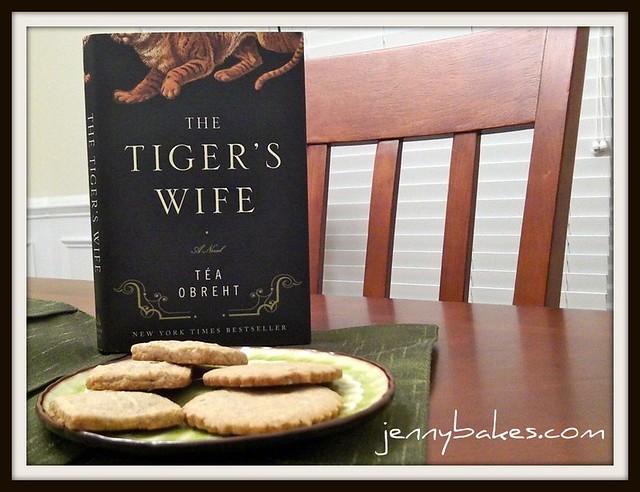
Most of the time, I will hunt down a recipe before reading the selected book, but I might find myself changing my mind based on what is in the book.  I definitely did that this time around.  I was all set to make a Povitica, which is a nut bread prominent throughout eastern Europe, particularly the former Yugoslavia.  As I read The Tiger's Wife, I kept coming across mentions of pepper cookies in the beginning of the book.  I got curious, did some internet research, and I found such interesting anecdotes connected to paprenjaci that I changed directions.

The one recipe I find online was originally posted by a man named Nitko, who lives in Zagreb and seems to have posted many of his grandmother's recipes online.  These have been copied and reposted many other places on the internet.  His recipe for paprenjaci was promising, but contained lard, and everything was in grams.  I don't eat lard, and wanted a recipe I could share, so what you see below is my take, as close to the original as I could make it.

Croatian Black Pepper Cookies (Paprenjaci)

Ingredients
  • 6 oz butter, at room temperature
  • 1/2 cup plus 2 tbsp sugar
  • 1 3/4 cup flour
  • 1 tablespoon ground black pepper*
  • 1 teaspoon ground cloves
  • 2 teaspoons ground cinnamon
  • 2 tablespoons light honey
  • 1 egg
  • 1 1/4 cup walnuts, ground (measured first)
  • 1 teaspoon ground nutmeg
Directions

Cream butter, sugar, and honey. Mix in egg. Mix in spices, then nuts and flour. Chill dough at least two hours. Roll out and use cookie molds or cookie cutters. Bake at 350 for 12 minutes.

* - These are pretty peppery.  Given the chance to make them again, I might do just 1 tsp.

The Tiger's Wife and Croatian Black Pepper Cookies
According to WikiTravel, paprenjaci are said to reflect Croatia's tumultuous history because they combine the harshness of the war periods (pepper) with the natural beauties (honey). This fits right in with the story in The Tiger's Wife. Come read my review!